Fix Chips, Cracks, and Gaps with Dental Bonding in Calgary
The Academy Dental — Dr. Guruprakash (GP) Bhattal
If you live in Calgary and one small accident, a lifetime of coffee, or a stubborn gap in your smile is holding you back, dental bonding is one of the fastest, most conservative ways to restore confidence — often in a single visit.
This deep-dive guide explains what dental bonding is, when it’s the right choice, how the procedure works, how to care for bonded teeth, what it costs (general guidance), and how the team at The Academy Dental under the care of Dr. Guruprakash (GP) Bhattal approaches predictable, beautiful results specifically for Calgary patients.
What is dental bonding?
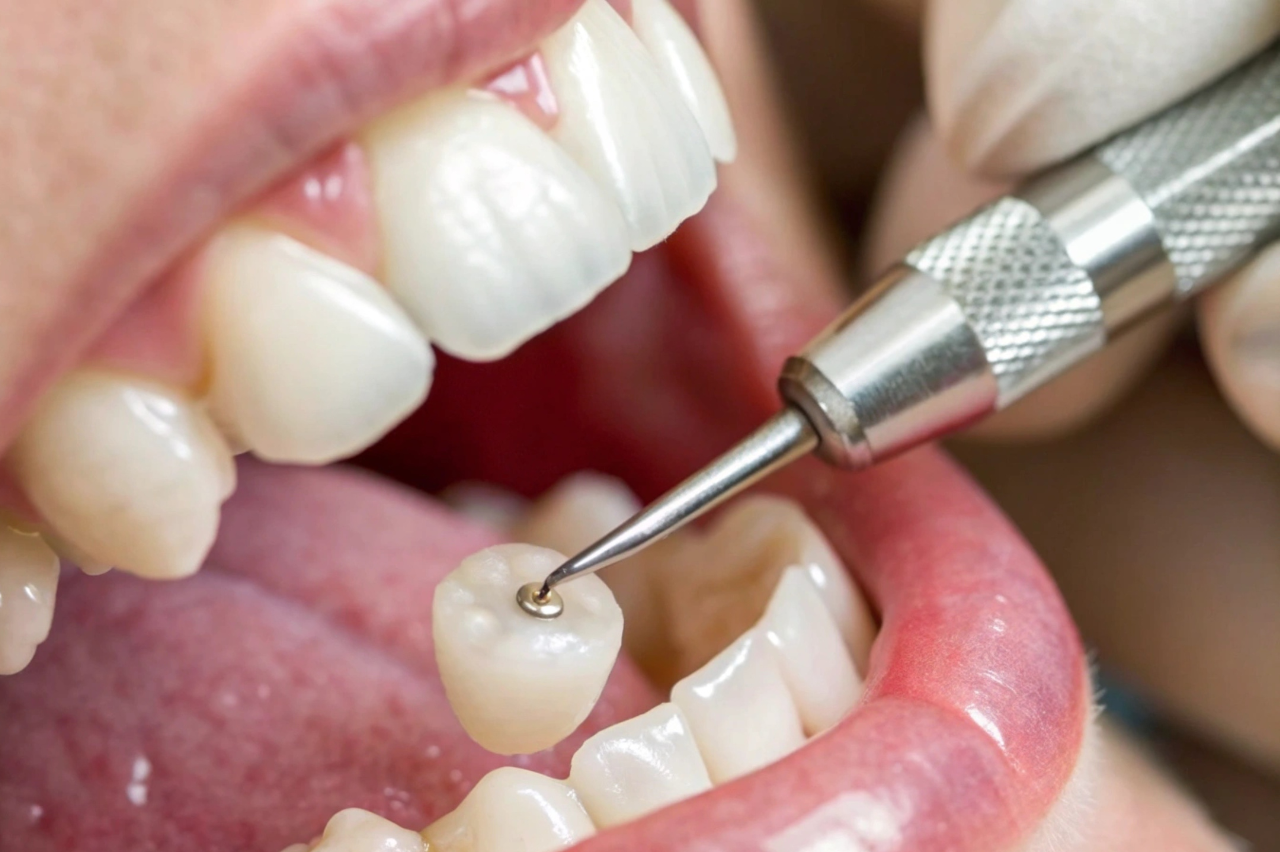
Dental bonding (also called composite bonding or tooth bonding) is a minimally invasive cosmetic and restorative treatment that uses tooth-coloured composite resin to repair, reshape, and protect teeth. The composite is a blend of plastic and fine glass particles that can be sculpted directly onto the tooth, hardened with a special light, and polished to a natural-looking finish.
Unlike veneers or crowns, dental bonding usually requires little or no removal of healthy tooth structure. That makes it an excellent first-line option when the problem is cosmetic or limited in size: a chip, a small crack, a gap between front teeth, mild discoloration, or a slightly misshapen tooth.
Dental bonding can be purely cosmetic (improving appearance) or functional (repairing damage or reinforcing a weakened edge), and modern composite materials offer remarkable color-match and polishability.
Why Calgary patients choose bonding
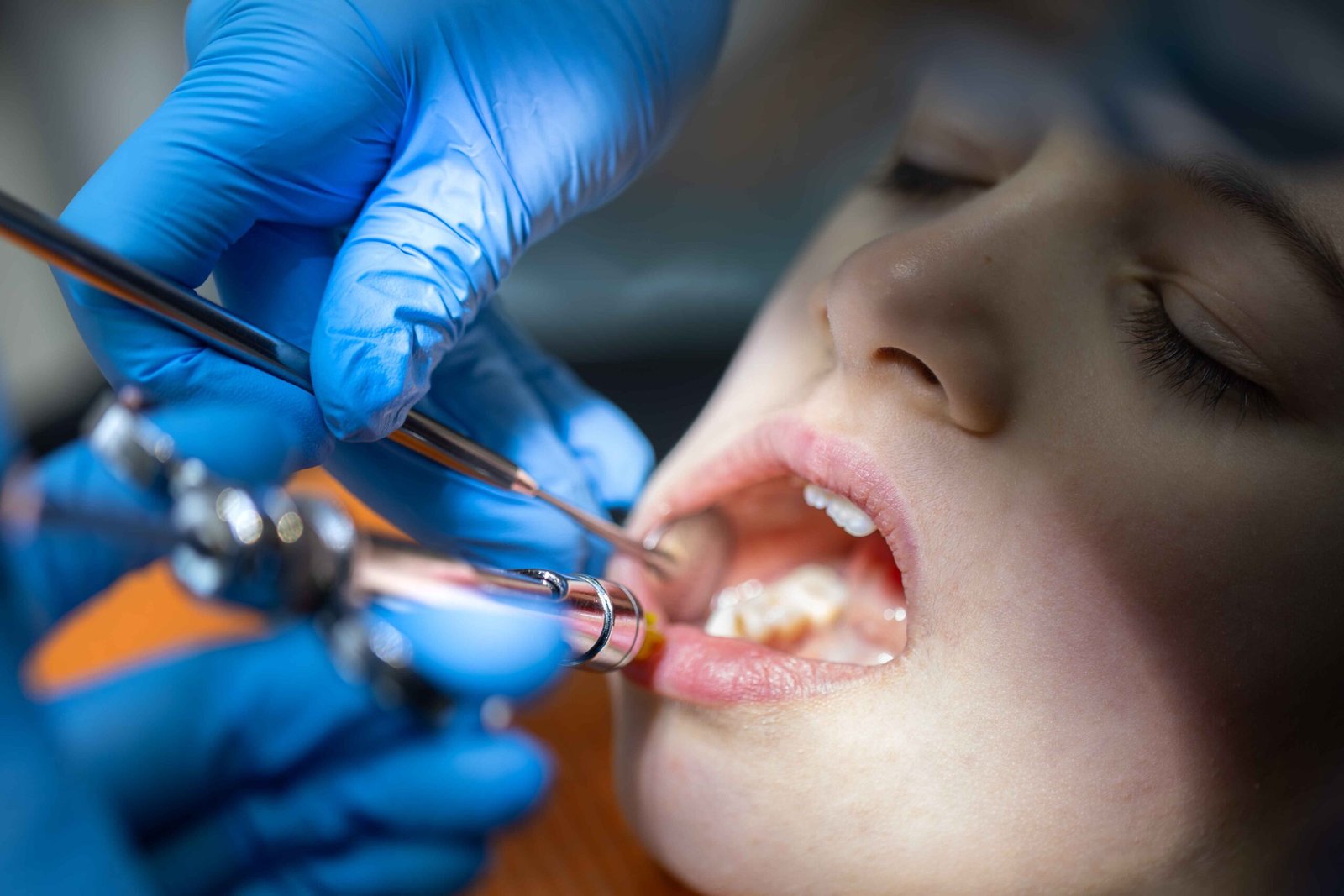
Bonding is popular for several reasons that matter to busy Calgarians:
Speed: Many bonding cases are completed in a single appointment. For small chips or gap closures, you can walk in and leave with an improved smile the same day.
Conservative care: Minimal to no drilling preserves natural tooth structure — an important advantage for long-term dental health.
Affordability: Bonding is generally more cost-effective than porcelain restorations like veneers or crowns.
Versatility: You can use bonding to repair chips, close small gaps (including the Bioclear approach for black triangle closure), reshape teeth, cover minor stains, and even replace old, small fillings.
Reversible to an extent: Because tooth structure is usually preserved, future options (veneers, crowns) remain available.
These benefits make bonding an excellent choice for people who want a quick, conservative cosmetic upgrade without long treatment timelines.
Common uses: what bonding can fix
Bonding is versatile. Typical uses include:
Repairing chipped or fractured teeth (front teeth are common).
Filling small gaps between teeth and closing “black triangles” near the gumline (Bioclear technique).
Camouflaging minor discoloration or staining that doesn’t respond to whitening.
Reshaping slightly misshapen or uneven teeth to create balance.
Repairing worn enamel or smoothing rough edges.
Replacing small, old fillings with tooth‑coloured composite.
If your concern is larger — for example a tooth with extensive decay or very large structural loss — bonding may not be the best long-term solution. In those cases, crowns or veneers might be recommended.
Materials and modern techniques (including Bioclear)
The quality of the composite resin and the technique used by the clinician make a big difference in appearance and durability. Contemporary composites come in many shades and translucencies, which allows a skilled dentist to mimic enamel and dentin layers for a natural look.
One advanced system you may hear about is Bioclear. Rather than free‑hand sculpting alone, Bioclear uses thin, clear matrices to wrap and shape the tooth while the composite is placed. This is particularly effective for:
Closing triangular gaps near the gums (black triangles) with a smooth, contoured result.
Creating predictable contact points when closing spaces between teeth.
Producing a glossy, anatomically correct emergence profile that resists staining and plaque retention.
Bioclear is a technique rather than a different material — it uses the same composites but applies them with a matrix system to produce more predictable, aesthetic outcomes in some cases.
The dental bonding procedure: step-by-step (what to expect)
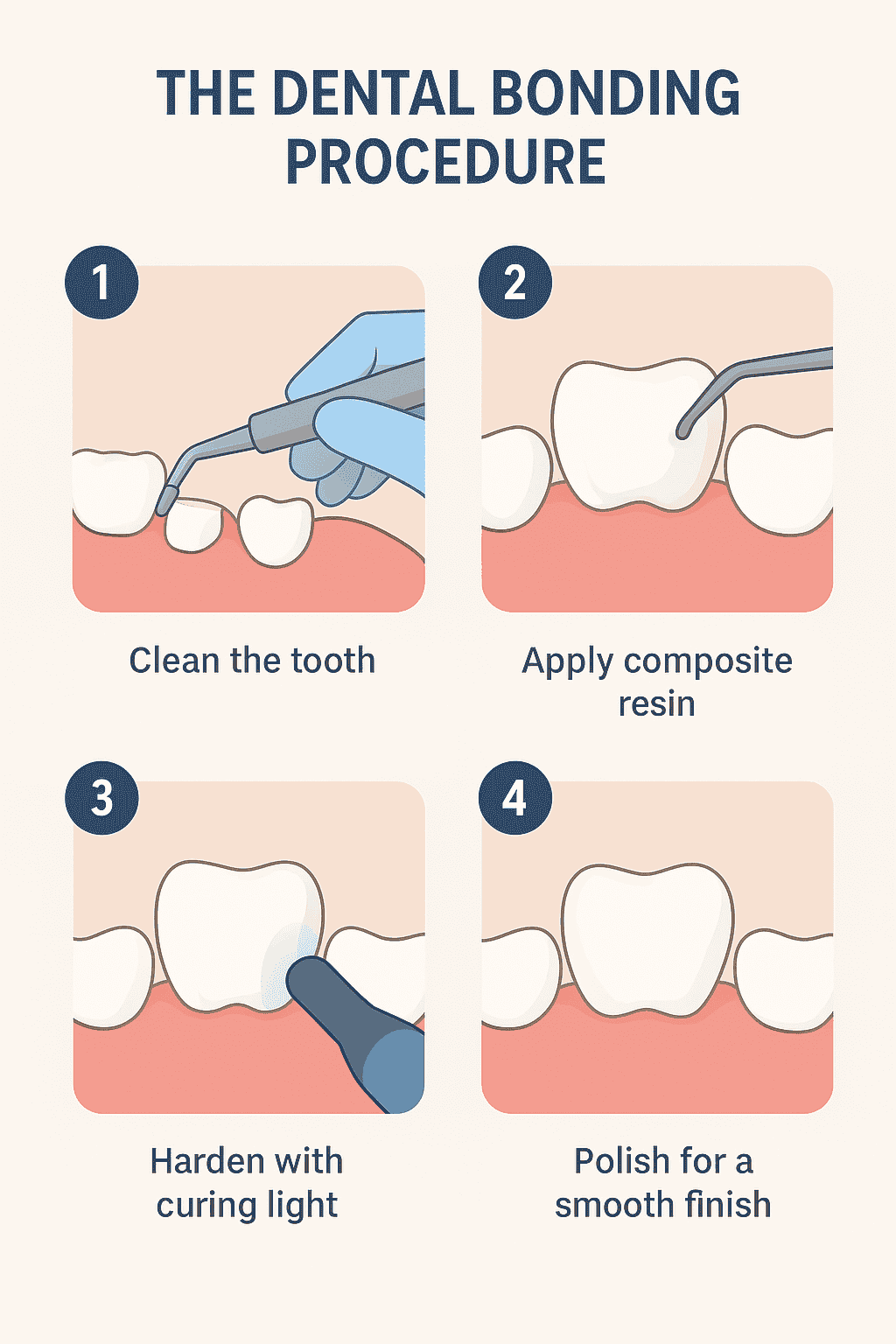
Below is a typical workflow that we follow at theacademydental. Individual cases vary; your dentist will adapt the steps to your needs.
Consultation & smile assessment: We start with a conversation about your goals, photographs, and a clinical exam. If you’re closing gaps, restoring a chipped tooth, or fixing staining, we’ll discuss whether bonding is the best approach or whether porcelain alternatives are more appropriate.
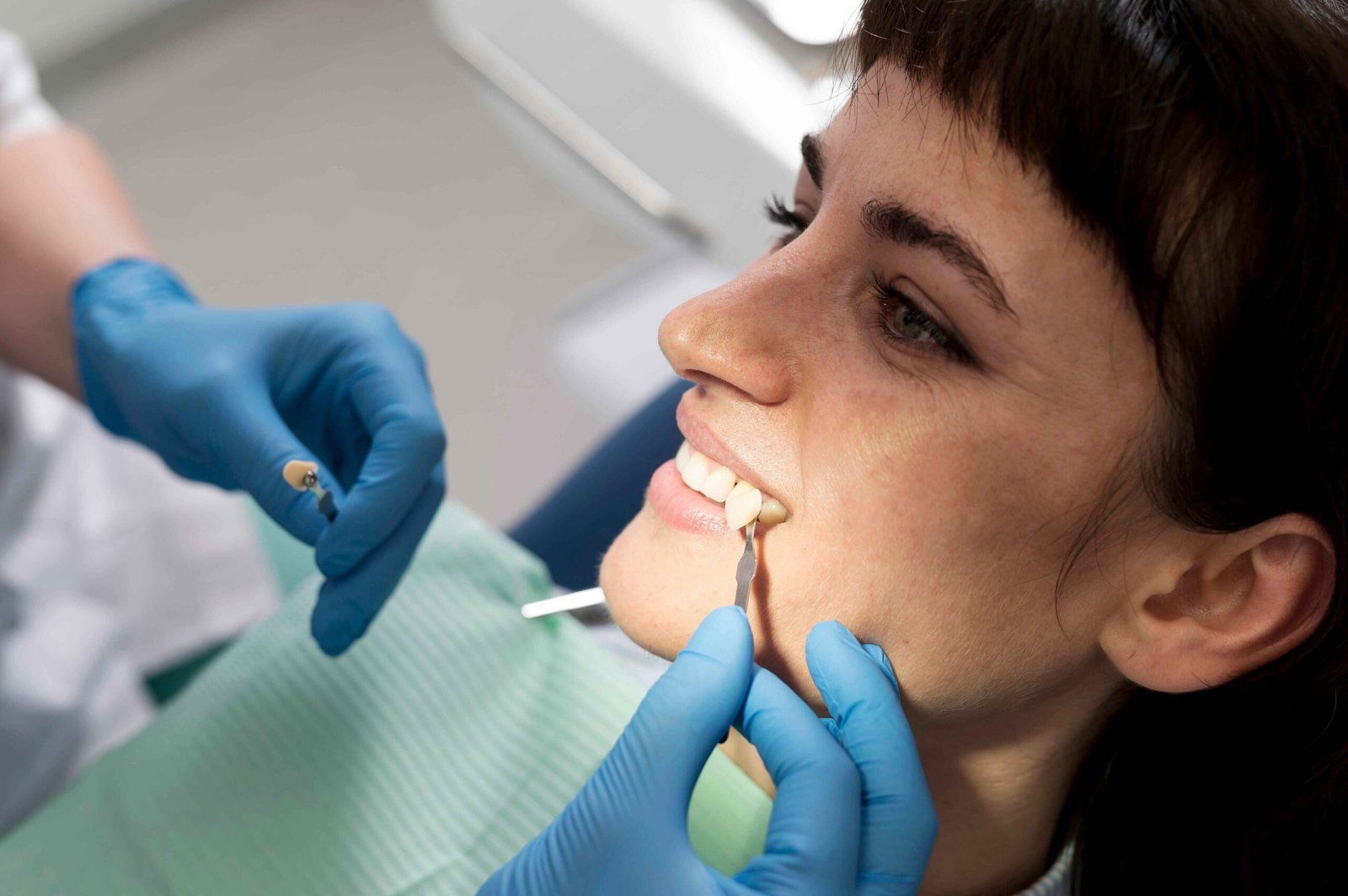
Shade selection and planning: We choose a composite shade that matches your natural teeth. If you plan to whiten, we recommend whitening before bonding because composite does not whiten once placed.
Minimal preparation: Most bonding cases need little or no removal of tooth enamel. The dentist may roughen the surface slightly with a burr or a micro-etchant to create a good surface for the adhesive.
Isolation: Keeping the area dry and free from saliva is essential. We use cotton rolls, suction, and sometimes a dental dam for moisture control.
Etching and bonding agent: A mild etchant is applied to the tooth surface to micro‑etch the enamel, then a bonding agent (adhesive) is applied and cured with a special light.
Composite application: Composite resin is placed in layers. Each thin layer is shaped, sculpted, and cured (hardened) with the curing light. Layering helps replicate the optical properties of natural teeth and increases strength.
Shaping and finishing: Once the composite is built up, the dentist trims and shapes it to match your bite and contours. The surface is polished to a high shine so it looks natural and resists staining.
Final check and adjustments: We verify your bite (occlusion) and make any necessary adjustments so the bonded tooth doesn’t catch or feel high.
A simple repair can take as little as 30–45 minutes. More complex smile-rebalance cases or multiple tooth restorations take longer.
Longevity: how long does dental bonding last?
With good care, dental bonding typically lasts 5 to 10 years, sometimes longer. Lifespan depends on several factors:
Location of the restoration: Bonds on front teeth usually last longer than those on biting surfaces of molars where forces are high.
Bite habits: Clenching, grinding (bruxism), or biting hard objects increase risk of chipping.
Oral hygiene & habits: Poor oral hygiene, heavy smoking, and frequent consumption of staining foods/drinks can age and stain the composite faster.
Quality of materials and technique: High-quality composites placed by an experienced dentist and polished well resist staining and wear better.
When a bonded edge chips, it can often be repaired quickly by re‑etching the area and adding more composite. If the bond becomes heavily stained or worn, replacement will be recommended.
Aftercare and everyday maintenance
Taking care of bonded teeth is straightforward:
Brush twice daily and floss once daily. Use non‑abrasive fluoride toothpaste.
Avoid using teeth as tools (opening packages, biting pens, etc.).
Avoid chewing ice, hard candy, or other very hard foods directly on the bonded tooth.
Minimize prolonged exposure to dark staining foods/drinks — coffee, tea, red wine, and berries — especially in the first 48 hours after bonding while the composite matures.
If you grind your teeth at night, a custom nightguard can protect bonded teeth and significantly extend their life.
Keep regular dental checkups and cleanings so we can polish and maintain bonded areas.
If a bonded edge chips, call us — small repairs are usually fast and affordable.
Risks and limitations (what bonding can’t do)
Bonding is not a universal solution. Limitations include:
Staining over time: Composite resins can stain more easily than porcelain. Excellent polishing and patient habits reduce this risk.
Less durable than porcelain: For very large cosmetic or structural problems, veneers or crowns are stronger and more stain-resistant.
Color stability: If you whiten your natural teeth after bonding, the composite won’t change colour. We recommend whitening prior to bonding if you plan to do it.
Chipping for heavy forces: Patients with bruxism need protective appliances or alternative restorative options.
Understanding these tradeoffs helps you choose the right treatment for your smile goals.
Bonding vs. veneers vs. crowns — quick comparison
Bonding: Conservative, quick, cost-effective. Best for small cosmetic fixes, chips, minor gaps.
Veneers: Thin porcelain shells bonded to the front of teeth. More durable and stain-resistant; require some enamel removal; higher cost.
Crowns: Full coverage for teeth with extensive damage or after root canal therapy. Strong and long-lasting but require removal of significant tooth structure.
At theacademydental we help you weigh these options and choose a plan that balances longevity, aesthetics, and conservation of tooth structure.
Cost considerations (Calgary guidance)
Costs vary depending on the complexity, the material used (standard composite vs. premium composite), the number of teeth treated, and whether advanced techniques like Bioclear are used.
Simple chip repair or single‑tooth bonding is typically more affordable than full cosmetic bonding across multiple teeth.
Multiple‑tooth smile makeovers with bonding take more time and materials and are priced accordingly.
Because fees vary across practices and depend on case complexity, we recommend booking a consultation at theacademydental for a personalized estimate. We’ll review options, show you before/after pictures of similar cases, and outline a clear fee structure so you can decide with confidence.
Who is a good candidate?
Good candidates for bonding include:
Adults with small cosmetic concerns — chips, small gaps, mild staining.
Patients wanting a conservative, less expensive option than veneers.
People seeking same‑day cosmetic improvement for front teeth.
Bonding may not be the best choice for:
Teeth with large restorations or extensive decay.
Heavy grinders unless they can wear a nightguard.
FAQs — Dental Bonding

Q1. What is dental bonding?
Dental bonding is a cosmetic and restorative dental procedure that uses tooth-coloured composite resin to repair chips, cracks, gaps, and discoloration in teeth. The resin is sculpted directly onto the tooth, hardened with a curing light, and polished to match your natural enamel.
Q2. How long does dental bonding last?
On average, bonding lasts 5 to 10 years. Lifespan depends on location, bite habits, and how well you maintain your oral hygiene. Small touch-ups can extend the life of your bonding.
Q3. Is dental bonding painful?
No, most bonding procedures are painless and require no anesthesia. For deeper repairs or sensitive teeth, local anesthetic may be used.
Q4. Can dental bonding fix gaps between teeth?
Yes. Bonding can close small gaps, including “black triangles” near the gumline. Advanced methods like the Bioclear technique create smooth, natural contours.
Q5. Does dental bonding stain?
Composite resin can stain over time from coffee, tea, red wine, or smoking. Regular cleanings, polishing, and good habits help keep bonding looking fresh.
Q6. How much does dental bonding cost in Calgary?
The cost depends on the size of the repair and number of teeth treated. Simple chip repairs are less expensive than full smile makeovers. At theacademydental, we provide personalized quotes after your consultation.
Q7. Will insurance cover bonding?
Insurance may cover bonding if it is restorative (to repair damage). Cosmetic bonding may not be covered. We can provide an estimate for your insurer.
Q8. Can children or teens get bonding?
Yes. Bonding is an excellent solution for chipped or uneven teeth in young patients because it preserves tooth structure and is easily repaired as they grow.
Q9. How do I care for bonded teeth?
Brush twice daily, floss daily, avoid biting hard objects, and limit staining foods and drinks. If you grind your teeth, a nightguard is recommended.
Q10. What are alternatives to bonding?
Alternatives include veneers (durable, stain-resistant porcelain shells) and crowns (full coverage for severely damaged teeth). Your dentist will help decide the best option for you.